The second line rings out
When the front desk is with the patient at the counter, an AI receptionist for a dental practice takes the call. Humbrook builds it for the practice to own. It books against the practice calendar and writes down what the caller actually said.
The call reaches a demo receptionist, not a salesperson. A project starts over email.
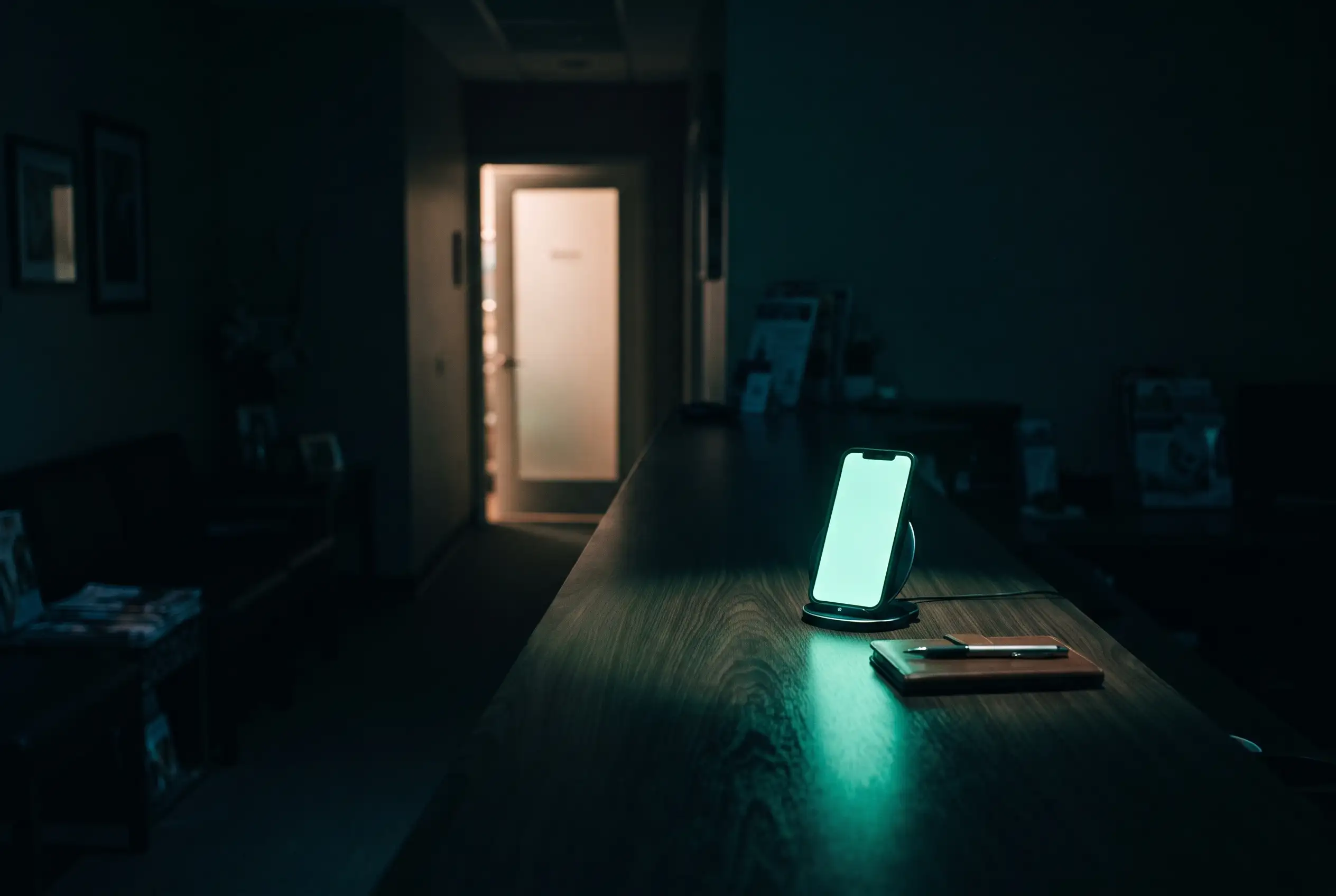
What happens while the desk is with a patient
A dental front desk answers the phone with somebody standing in front of it. Through a morning check-in block, the same two people are taking a copay, chasing an insurance verification and picking up the line at once, so the second call goes to voicemail. After close and all weekend, nobody picks up at all.
The caller who cannot wait is usually the one in pain. A cracked tooth at eight in the evening does not leave a message. That patient carries on down the search results to the next practice. The receptionist answers instead, says once that the caller is speaking with an AI assistant and the call may be recorded, then finds the first open chair.
Today 5:18 pm
Ben A. called back about his recall reminder.
Booked Tuesday 9:20 am with the hygienist.
He asked whether the practice still takes his plan.
It picks up
The line is answered after hours and while the desk is busy. The caller hears one flat sentence first: an AI assistant, and the call may be recorded. Then it gets on with the call in plain language.
It sorts urgent from routine
A patient in pain is not triaged. It hears the urgency, reads back the emergency instruction the practice has written, and takes a callback number. It offers no clinical judgment, and it does not decide whether a tooth can wait.
It books the chair
For hygiene, a recall or a new patient call, it checks the live calendar, offers times that are genuinely open, and writes the appointment down with the caller’s name, number and reason.
It hands the detail over
The confirmed booking reaches the practice by text and email, in the form the desk keys in. A new patient call arrives flagged as one, so the morning opens on a sorted list, not a voicemail box.
Asked something it was not set up for, it says so and passes the caller through rather than guessing.
What the practice already books in
Three practice management systems, and the honest ceiling of what Humbrook can reach in each. Dentistry is the one trade where the answer genuinely changes with the software.
- Real two-way sync, once the key lands
Open Dental
Open Dental publishes a genuine developer API. The key is requested by the practice, directly from Open Dental, and approval takes one to three business days, so ask before the build starts. Once it lands, the receptionist reads the live schedule and writes the appointment back into Open Dental.
- Calendar level, confirmed at the desk
Dentrix
Dentrix has no public API, so the build works around it rather than into it. The time is held on a calendar the practice controls, the confirmed detail goes to the front desk, and a person enters the appointment in Dentrix.
- Calendar level, keyed in by a person
Eaglesoft
Eaglesoft is closed the same way, and nothing appears inside it on its own. The receptionist takes the appointment, puts it on the practice calendar and texts the detail through, and the desk keys it in between patients.
Where a booking tool has no open way in, the receptionist books on a calendar and sends the details on. Nothing here claims a connection that is not there.
What owners ask first
Is this HIPAA compliant?
Compliance belongs to the practice, not to the software. The practice is the covered entity. Humbrook signs a business associate agreement before the phone agent handles any patient information, and the build stores no clinical records. The band below sets out the whole arrangement.
Does it work with Dentrix, Eaglesoft or Open Dental?
The answer differs by system. Open Dental has a real API and syncs both ways once the practice’s developer key is approved. Dentrix and Eaglesoft have no public way in, so the appointment is booked at the calendar level and entered at the desk by a person.
A patient calls in pain after hours. Is a bot safe for that?
No bot should try to triage a dental emergency, and this one does not. It notes the urgency, reads back the emergency instruction the practice has written, and takes a callback number so a person can ring back. It says nothing about the tooth.
Where the obligation actually sits
The dental practice is the covered entity under HIPAA. A phone system is not one and never becomes one. Obligations reach a vendor only through a signed agreement, which is why the honest answer is never a flat yes about a piece of software. Anyone who gives you that flat yes has the relationship backwards.
So the agreement comes first. Before the phone agent handles any patient information, Humbrook signs a business associate agreement with the practice, the same as any vendor that touches patient information. Nothing goes live before it is signed, and that order is not negotiable.
The build stores no clinical records. A call produces scheduling and message taking: a name, a number, a reason, and a time on the calendar. Chart notes, treatment history and imaging stay inside the practice management system the practice already runs. The practice can see everything a call leaves behind, and can have it deleted.
Questions this raises
Is an AI receptionist HIPAA compliant for a dental practice?
Compliance sits with the practice, and a signed business associate agreement comes before any patient information moves.
What happens to a missed call?
Where a missed call actually goes, and what an AI receptionist does with it instead of voicemail.
How much does a custom AI phone agent cost?
Humbrook quotes one fixed price per build by email, and the vendor bills go straight to the client.
Start with the agreement, not the build
Send the practice management system the practice runs and the hours the phone goes unanswered. The reply says what a build can honestly reach in that system, what it cannot, and how the business associate agreement is handled before anything is built. The practice owns the finished system outright, on accounts in its own name.
It answers as a demo business in this trade, so the hours, services and prices it quotes belong to that business. Everything underneath is the real thing: it listens, checks a live calendar, and writes the booking down.
No form, and no call needed to start.