The 2am call, water still moving
An AI receptionist for plumbing companies has to tell a burst pipe from a slow drain before anything else. Humbrook builds one that asks the question first, gets an emergency caller to the shut-off, and texts the address to whoever can get there.
The call reaches a demo receptionist, not a salesperson. A project starts over email.
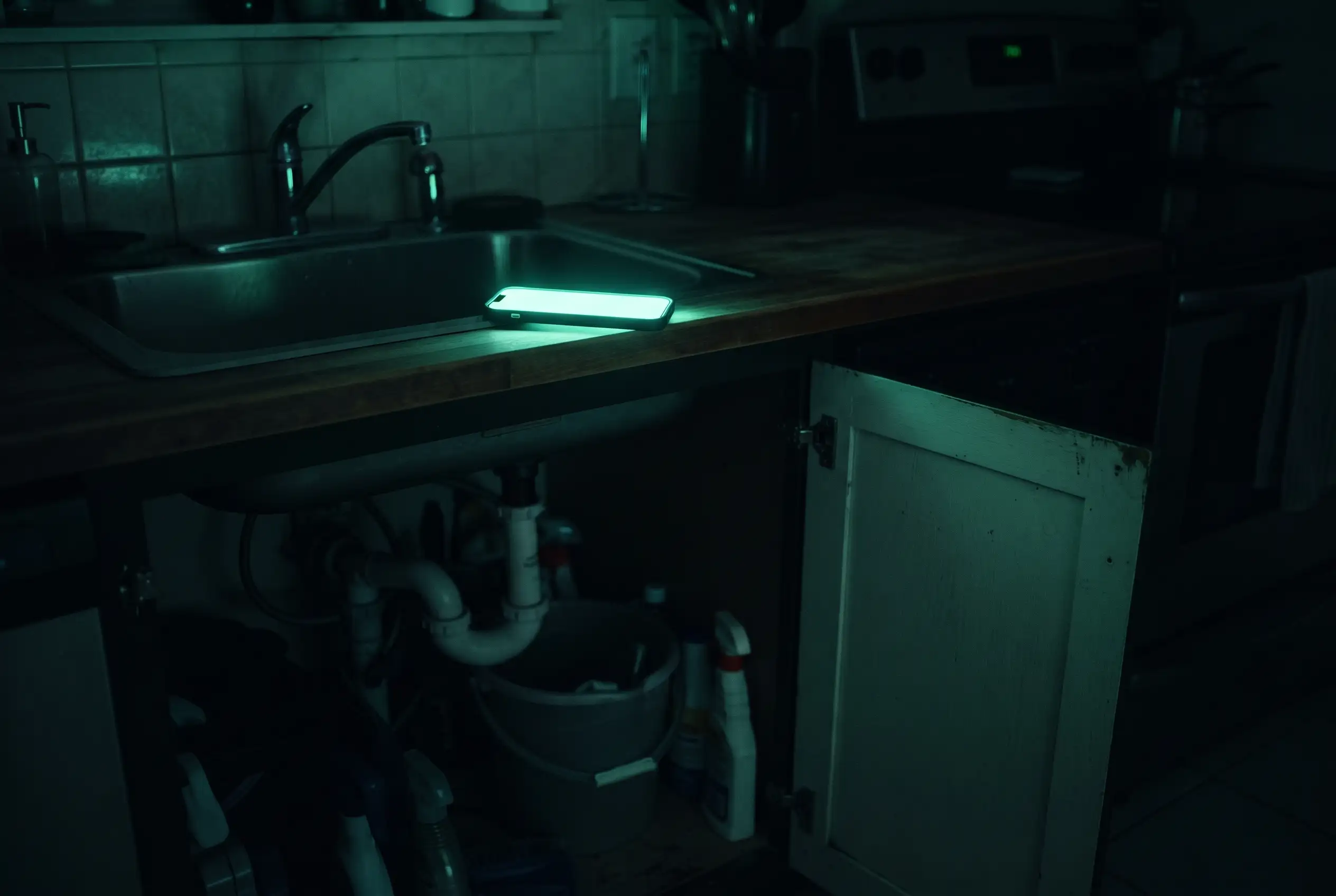
A call that cannot wait, and one that can
Water is moving through a wall or a ceiling right now, and every minute costs the caller more. The first question is not when someone can come, it's what to shut off.
The same line carries a slow drain booked for Thursday, and the difference between the two calls is how fast the caller needs an answer.
Tonight 11:07 pm
Priya N. called about water coming up through a kitchen drain.
Walked her to the shut-off. It is off now.
She wants a call back tonight, not the morning.
Answers
It picks up live while you are mid-job or asleep, instead of sending the caller to voicemail, and texts the caller back with what happens next.
Asks
The address comes first, then the one line that actually decides the call: what is happening right now, and whether water is still running.
Sorts
An active leak gets walked toward the main shut-off and flagged for a callback right away, while a slow drain gets offered the next open service window.
Notifies
You get a text instead of a voicemail to replay: the address, the problem in one line, and whether it is a callback now or a job on the schedule.
Asked something it was not set up for, it says so and passes the caller through rather than guessing.
What it plugs into
Most plumbing outfits run on one of two things: real field-service software, or a shared calendar and a phone. Both get the honest version here.
- Two-way sync
Jobber
Jobber has an open API, so a booked call reaches the schedule as a real two-way sync, not a note someone has to copy over by hand.
- Books directly
Google Calendar
For an outfit running the whole week off a shared calendar and a phone, the receptionist writes straight into that calendar with a real two-way sync, no separate platform required.
Where a booking tool has no open way in, the receptionist books on a calendar and sends the details on. Nothing here claims a connection that is not there.
What owners ask first
The phone already gets answered personally, one truck, one person. Why add this?
This is not about replacing the owner answering. It is for the calls that hit voicemail while the owner is under a sink with wet hands, or asleep when a pipe bursts at 2am.
Can it actually handle a real emergency call at 2am?
A burst pipe at 2am is urgent, and a caller in that spot does not want to be talked at. The job is the address, the problem in one sentence, and a text to the owner immediately. It does not try to diagnose the plumbing itself.
Who owns the build once it is paid for?
The plumbing company does. The build runs inside accounts it opens itself, not ones Humbrook holds and rents back. Nothing here disappears because Humbrook stops being involved.
Questions this raises
What happens to a missed call?
Where a missed call actually goes, and what an AI receptionist does with it instead of voicemail.
Can an AI receptionist run on self-hosted n8n?
The build runs in the client's own n8n, Vapi and Twilio accounts, never on a Humbrook server.
Hear what a plumbing call sounds like
Email starts a build scoped to how the phone actually rings for a plumbing company, the 2am burst pipe and the Thursday drain job both included. One fixed price, paid once, on accounts the company owns.
It answers as a demo business in this trade, so the hours, services and prices it quotes belong to that business. Everything underneath is the real thing: it listens, checks a live calendar, and writes the booking down.
No form, and no call needed to start.