The phone during dinner rush
Reservation calls, to-go orders and a question about tonight all land at the exact moment the host stand is seating a full room. Humbrook builds an AI receptionist that answers them anyway, checks the calendar, and texts the confirmed detail to the floor.
The call reaches a demo receptionist, not a salesperson. A project starts over email.
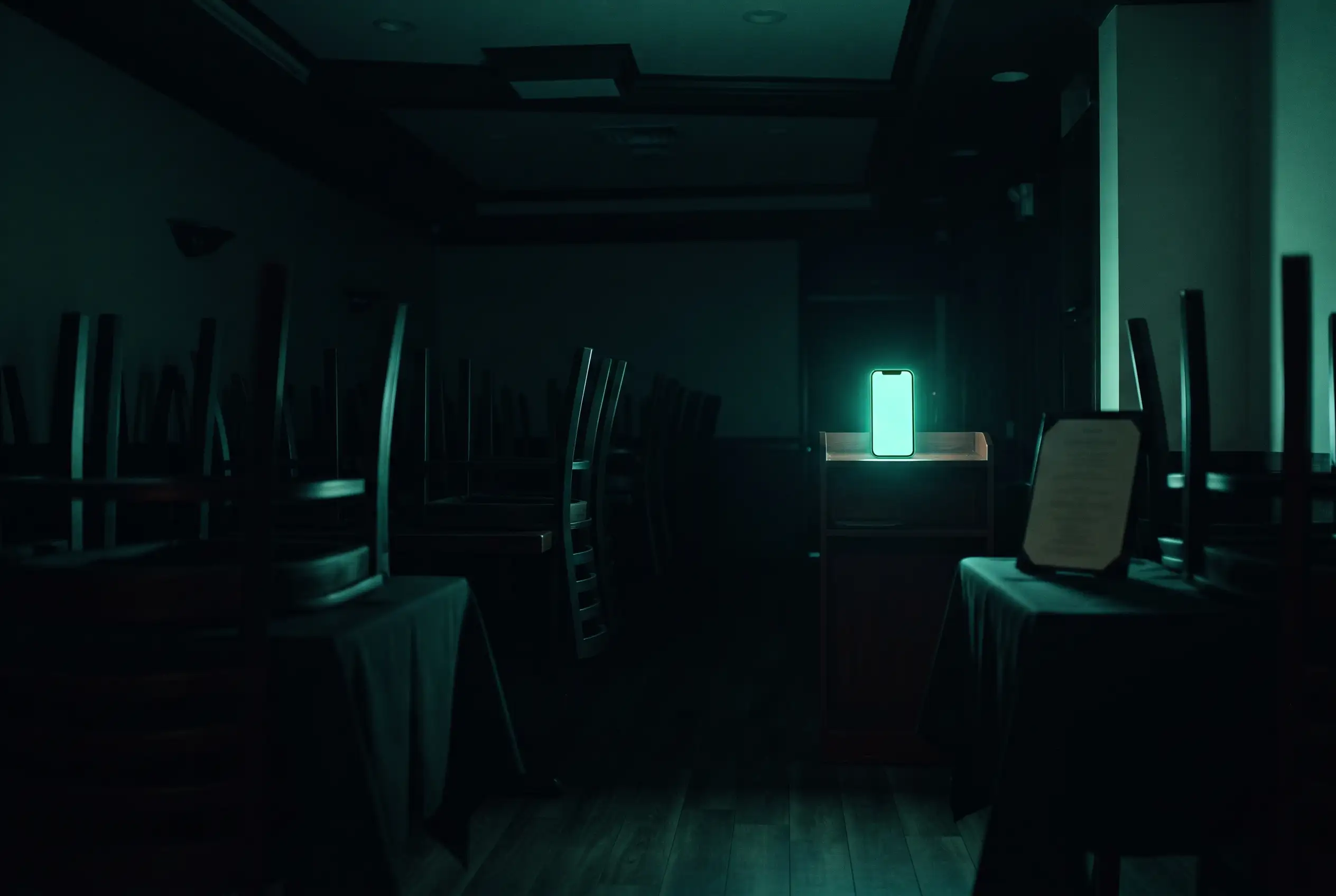
Answered without pulling anyone off the floor
The phone rings hardest during the exact stretch when nobody near it can leave: a table for six, a to-go order, a question about the kids menu, all competing with a full room for the same two hands.
Before the doors open, nobody covers the phone at all, so the first calls of the day go straight past the host stand to nothing.
Today 6:41 pm
Owen T. called for a party of six on Friday.
Booked 8:00 pm, back room.
Two at the table cannot have gluten.
Answers
It picks up while the host stand is seating a party of six and a bartender is three deep at the well.
Asks
It asks what the call needs: a reservation, a to-go order, or a quick question about hours and the kitchen.
Checks
It checks the calendar for the shift and confirms a table, or gives an honest answer when the room is walk-in only.
Hands off
A twelve-top, a complaint, or anything outside the routine goes straight to a person with the details already written down.
Asked something it was not set up for, it says so and passes the caller through rather than guessing.
Built around what a restaurant already runs
None of the three below open a live two-way door. Here is the honest shape of what each one allows, and what Humbrook builds around it instead.
- Partner-gated
Toast
Toast's integration path sits behind its own partner program. Humbrook confirms that partnership before quoting anything, and unless the restaurant already holds it, builds a calendar and text-confirmation layer around Toast, not a live sync into it.
- Invite-only
OpenTable
OpenTable offers no public API and stays invite-only for select partners. The receptionist answers the call and captures the reservation separately, then hands the confirmed detail to the host stand by text.
- Invite-only
Resy
Resy keeps the same invite-only model, with no self-serve API to build against. The receptionist takes the reservation on its own calendar and texts the confirmed detail to the host stand before the guest arrives.
Where a booking tool has no open way in, the receptionist books on a calendar and sends the details on. Nothing here claims a connection that is not there.
What owners ask first
Reservations already go through OpenTable or Resy. Why add this?
Those platforms handle a booking well once a guest is already inside the app. This catches what they cannot: the phone ringing mid-service when nobody can reach it, and the to-go order calls that never touch a reservation platform at all.
Does it work with Toast?
Toast's integration path sits behind its own partner program, and most independent kitchens are outside it. The receptionist still answers the call, books the table or the order against its own calendar, and sends the confirmed detail to the host stand by text, a layer built around Toast rather than a line into it.
Won't a regular who calls every Friday notice it's not a person anymore?
A caller who knows the restaurant will hear the difference, and pretending otherwise loses trust. The call opens with one plain line that says what it is, then moves straight into party size and time. Anything it was not set up for goes to a person with the details already collected.
Questions this raises
What happens to a missed call?
Where a missed call actually goes, and what an AI receptionist does with it instead of voicemail.
How much does a custom AI phone agent cost?
Humbrook quotes one fixed price per build by email, and the vendor bills go straight to the client.
The phone, covered through service
Humbrook builds the receptionist that answers the calls dinner rush cannot, books the table or the to-go order against a live calendar, and gets the detail to the host stand in writing before the guest walks in. The restaurant owns it at the end, on its own accounts.
It answers as a demo business in this trade, so the hours, services and prices it quotes belong to that business. Everything underneath is the real thing: it listens, checks a live calendar, and writes the booking down.
No form, and no call needed to start.