The phone rings mid-service
Humbrook builds an AI receptionist for salons and medspas that picks up the calls nobody at the salon can reach, checks what chair time is open, and texts the front desk what it booked.
The call reaches a demo receptionist, not a salesperson. A project starts over email.
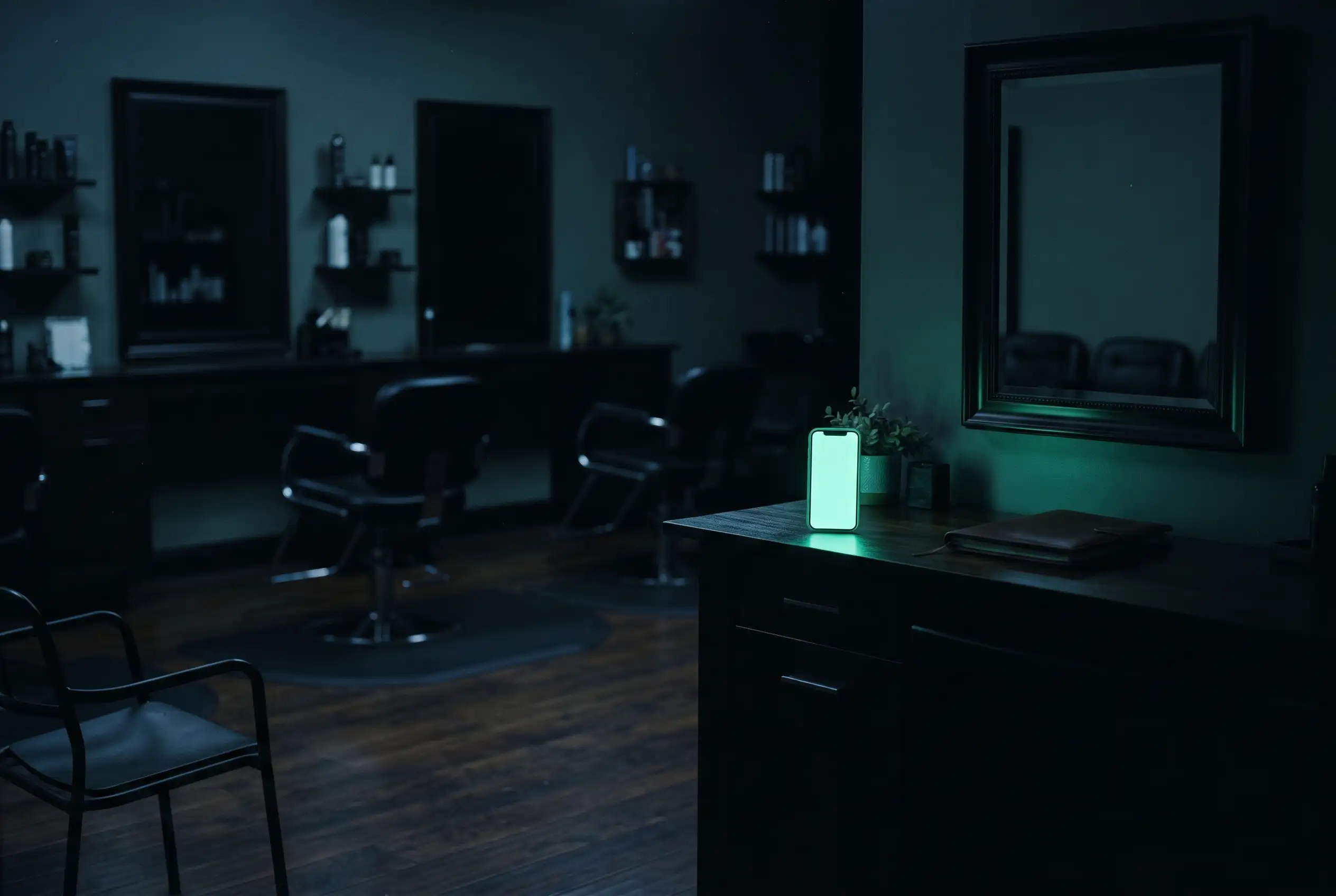
What happens to a call during a service
The phone rings while both hands are in a client's hair and a color is processing that cannot be left to sit. The call goes to voicemail.
On the closed day and after the last appointment, the phone rings anyway. Those callers want a booking or the cancellation slot that just opened, not a voicemail.
Today 8:15 pm
Marisa L. called about colour and a trim.
Booked Saturday 11:00 am, two hours of chair time.
She asked whether the same stylist is in that day.
The salon number
Your existing salon number forwards to the receptionist when the desk is with a client, or when the salon is closed.
The service menu
It says once that it is an AI assistant and the call may be recorded, then works from your service menu: the service, the stylist, and how long it runs.
The chair time
It checks the availability the salon set aside, holds a slot long enough for that service, and offers the waitlist rather than inventing a time when the day is full.
The front desk
A text arrives with the caller, the number, the service and the slot, so the opening shift reads a booking instead of clearing a voicemail box.
Asked something it was not set up for, it says so and passes the caller through rather than guessing.
What the salon books in
Four booking platforms, and the honest ceiling of each. One takes the booking straight off the call. The other three stop at a calendar, and a person finishes the entry.
- Two-way sync
Square
Square publishes an open API, so this is the one on the list where the booking never touches a human hand. The receptionist reads the live calendar during the call and writes the appointment back into Square before the caller hangs up.
- Calendar level, entered by a person
Vagaro
Vagaro publishes an API, but it only reads the book: it can show open slots and existing appointments, and it offers no way to write a booking in. So the receptionist holds the time against the availability you set, then sends the front desk the name, service and slot to key into Vagaro.
- Calendar level, entered by a person
Fresha
Fresha publishes no public API, and pretending otherwise is how a build gets sold that quietly does not work. The receptionist takes the whole call, reads the service length off your own menu, and hands the desk a list to enter in one pass.
- Calendar level unless the salon is on the enterprise tier
Boulevard
Boulevard does have an API, but it sits behind an enterprise tier rather than being open to any account. A salon already on that tier gets checked against it directly. Every other salon gets the same calendar-level build as Vagaro, and Humbrook confirms which tier the account is on before quoting anything, having built no Boulevard connection to date.
Where a booking tool has no open way in, the receptionist books on a calendar and sends the details on. Nothing here claims a connection that is not there.
What owners ask first
Will this feel cold to regulars who like the front desk?
The relationship with the front desk is worth protecting, so this does not touch it. The receptionist only answers what already goes to voicemail: the mid-service calls and the closed day. Every call the desk can pick up, the desk still picks up.
Does it work with the software the salon already books in?
That depends which one, and the cards above give the real ceiling for all four. Where a platform has no open way in, the receptionist books at the calendar level and a person enters it, and you are told that before anything is built.
What if it double-books a stylist?
That would be worse than a missed booking, so the first build is scoped small on purpose: one service type or a waitlist only. It works from the availability you hand it, and every booking sends a text the desk can catch and correct.
Questions this raises
What happens to a missed call?
Where a missed call actually goes, and what an AI receptionist does with it instead of voicemail.
How much does a custom AI phone agent cost?
Humbrook quotes one fixed price per build by email, and the vendor bills go straight to the client.
Start with the calls the salon already loses
Email Humbrook with the platform the salon books in and the hours the phone goes unanswered. The reply says what a build can reach inside that platform and what it cannot. The salon owns the finished build, on accounts opened in its own name. Dialing the demo number first is the faster way to judge it.
It answers as a demo business in this trade, so the hours, services and prices it quotes belong to that business. Everything underneath is the real thing: it listens, checks a live calendar, and writes the booking down.
No form, and no call needed to start.